Unconventional and Ambiguous Things Eg In Books Art or Movies
The Children'due south Volume Review Interview in partnership with Crystal Mason, writer of The Domestic dog That Was Dissimilar
Crystal Mason started her writing journey with poetry, then transitioned into narrative writing. She completed a program in elementary didactics at Western Governors University, and she plans to teach the second grade. She enjoys working with children, and her goal, outside of education, is to continue writing stories that are inspiring and entertaining to her readers.
In this interview, nosotros talk well-nigh her moving picture book, The Dog That Was Different, a story well-nigh understanding and accepting difference as something to celebrate.
Dr. Jen Harrison: What inspired you to start writing books for children?
Crystal Stonemason: Prior to writing stories for children, I wrote poetry along with a few unpublished fiction titles for adults. I transitioned from those areas afterwards working equally a substitute instructor and hearing the laughter ringing out from children while reading them entertaining books; the laughter gave me much joy, and I was inspired to commencement writing children'due south stories. It gave me a new sense of purpose, and it connected well with my teaching profession.
What made y'all want to write a story about being different and accepting differences in others?
I beloved to write entertaining stories that make children laugh, but I besides recollect it's important to accept a central bulletin that children/people tin can relate to. Too, considering I'm in the educational activity field, information technology was important that my book aligned with academic standards so information technology could be incorporated into a school's curriculum. In this story, the primal message is acceptance. Acceptance, equally well as empathy, can be topics of discussion in teaching lessons as it pertains to this story.
In addition, this narrative story is good for character edifice; it aids students in making connections and learning how to care for others
Gilt's behavior is really very different! Is he based on a real dog?
No, Gilt was not based on a real dog.
What was your inspiration for some of his quirks?
Humans were my inspiration. Thus, I made him act like a human; we all know that dogs don't apply the commode, consume with a fork, etc. This is why this story is entertaining. Children get to encounter a dog interim like a human, which may seem silly and/or funny to them.
Why did you lot choose to use a domestic dog rather than other children to illustrate your message nearly difference and acceptance?
I thought it would be more entertaining to employ a canis familiaris.
Do you think pets play an essential role in helping children learn nearly empathy? Why (or why not)?
I call up it depends on the upbringing and personal experiences of a child. For example, the boy in my book was able to make the connectedness regarding empathy as a upshot of his negative school feel. Also, if a child was not reared in a household with animals and/or the kid doesn't really care for animals, there's less likelihood of the child learning about empathy as information technology relates to animals.
You kept the illustrations for this story elementary. Tin can you tell us a little fleck well-nigh that design option? How do yous feel that the images support the message in the story?
I wanted the characters to stand out in the story and wait like real humans/animals, which I believe is accomplished. The images support the message because you take a canis familiaris doing anarchistic things, which do not fit the mold of a typical dog. Also, there's an image where the reader can see how the boy is able to brand a connection, which led him to experience empathy, thus leading to acceptance of his dog.
John's mom is hands-off mainly in the story, simply she'due south ever there with words of wisdom when John needs them. Is there a message in this story for parent readers and kid readers?
John's mom bought Gilded for him because he wanted a domestic dog. However, it was his responsibility to take care of the dog. His mom helped to reinforce the message about acceptance throughout the book (in her talks with John) equally it related to the dog and John. The central bulletin for parents and children was primarily nearly acceptance.
What would you lot recommend to readers who enjoyed your volume and would like to read more than about accepting differences?
I would recommend that readers continue seeking out books and/or culling means to reinforce the bulletin. Likewise, it would exist bully to pass forth and/or become the discussion out to other readers who you remember would enjoy and benefit from the message. There are platforms such as Goodreads and other social media sites where books are recommended to readers. You can search out the genre, etc. That'south one way to notice what you're looking for.
Do you lot have any recommendations for educators who want to include your book in an "inclusivity" curriculum? What are some ideas for using the volume in the classroom?
This story tin exist used in Language Arts lessons (in reading and writing) involving recounting the offset, middle, and catastrophe of a story to assist detect the theme/central message. Students can exist taught how to write a narrative story by using a graphic organizer to come with a topic, title, and details (eg: setting, characters, sequence of events, etc) for their story. I would use my volume to model how to complete the organizer, so students would have a reference to become by when completing their organizer.
In another lesson, students would transfer their ideas from the organizer onto writing paper, making sure the details were cohesive, made sense, and in the right order. These are just a few ways. There are a lot of creative means to include my book in lessons.
Will there be other stories most John and Golden?
No, there will not be other stories well-nigh this duo.
For more information, visit https://crystaldawnwrites.com/.
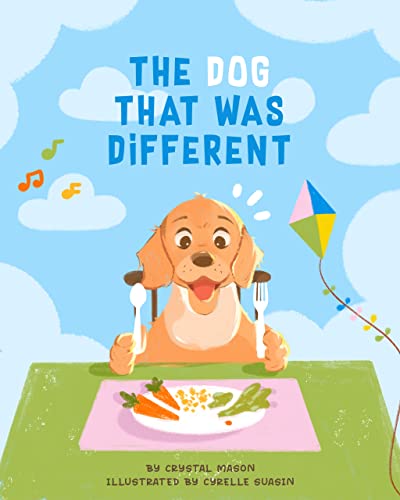
The Dog That Was Dissimilar
Written by Crystal Mason
Illustrated by Cyrelle Suasin
Ages 3-vii | 25 Pages
Publisher: Crystal Mason | ISBN-thirteen: 9798418565174
Publisher'south Synopsis: Golden is a gold retriever who is not like other dogs. For example, he likes to read the newspaper while sitting on the commode. Well, he tries to read the newspaper. His owner, whose proper noun is John, is fed upwards with him; he but wants a normal domestic dog. During John's struggle to modify Gold, he gets a dose of his own medicine, which gives him a new perspective toward Golden's behavior.
Buy the Book
This interview— Crystal Bricklayer Discusses The Domestic dog That Was Different—was conducted betwixt Crystal Stonemason and Dr. Jen Harrison. For similar books and articles, follow along with our content tagged with Credence, Multifariousness, Dogs, and Film Book.
How You lot Support The Children's Book Review
We may receive a pocket-size commission from purchases made via the links on this page. If you detect a volume or product of interest on this page and apply the links provided to make a buy, y'all will help support our mission to 'Grow Readers.' Your back up means we tin can continue delivering quality content that's available to all. Thanks!
mccormicksprientake.blogspot.com
Source: https://www.thechildrensbookreview.com/2022/05/crystal-mason-discusses-the-dog-that-was-different

Post a Comment for "Unconventional and Ambiguous Things Eg In Books Art or Movies"